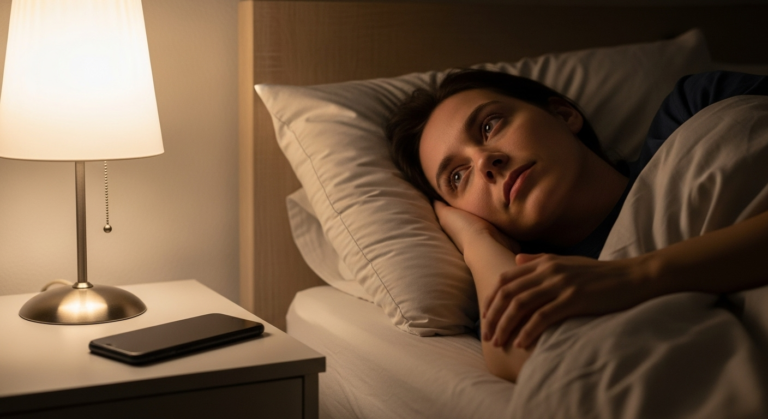

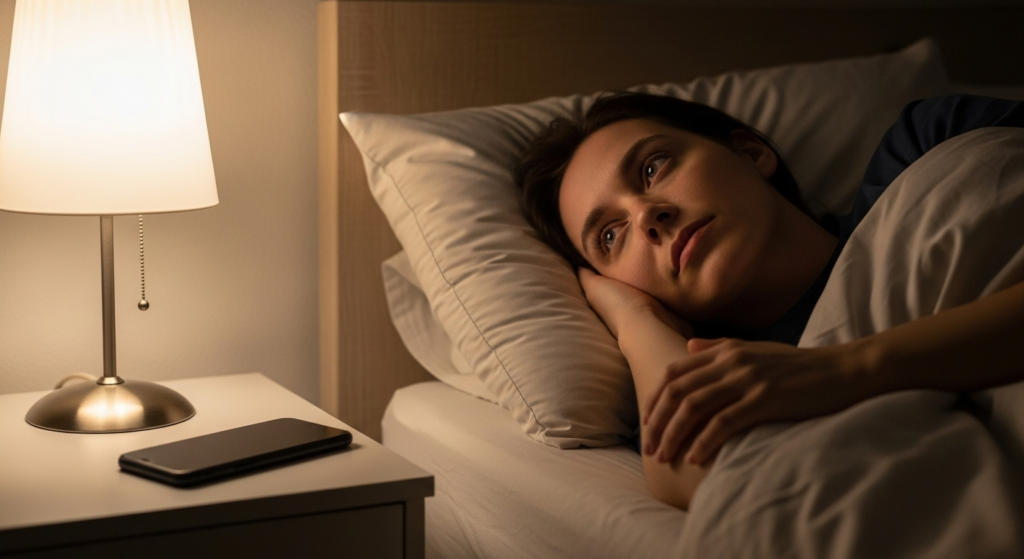
Have you ever had the struggle of being tired throughout the day, but when you finally go to lie down on your bed at the end of the day, you can’t sleep for about an hour, and you are just aimlessly staring into pitch-black nothingness? Slowly, your mind starts becoming more active, and you lie in bed with nothing but the frustration of a racing mind. I could relate because I have faced that challenge too, and it is not just a screen time problem.
Are Nighttime Routines and Skincare Enough for Better Sleep?
Nighttime routines are all the hype on Instagram and other social media platforms, and nighttime cleansing skincare is also all the hype recently. It may all look perfect on paper or on our screens, but it may not actually be effective enough to make an individual fall asleep faster.
And what about all the doom scrolling, too, right before bed? Making sure to answer every single text or going through every single reel, thinking that just one more minute won’t do any harm, and it results in continuous scrolling till 3 am when you finally realize that you have to be at work or at school in 2 hours from now. If only you could reverse time and sleep well, but we all know that the cycle of doom scrolling would be never-ending, even if we had the power to rewind time.
Why Sleep Quality Matters More Than Sleep Hours
Our thoughts and emotions play a vital role in our quality of sleep. Have you ever wondered how, even after sleeping for 10-12 hours, you can feel tired? Whereas sleeping for maybe 2-3 or even 5 hours at maximum can make you feel energized? It is not about the number of hours you sleep in a day; it is about how sound your sleep is.
When the mind is filled with stress, worry, or overthinking, the body remains in a state of alertness. This prevents the nervous system from fully relaxing, making it difficult to fall asleep even in a quiet and dark room. Constant negative thinking can make it hard for the brain to slow down at night. Instead of preparing for rest, the mind continues to process fears and pressures from the day.
The brain receives signals from a calm mental state, which indicates that the body can safely enter rest mode. The human body enters relaxation mode when a person achieves mental stability. People experience difficulties falling asleep when they lack emotional safety, despite being physically exhausted.
Sometimes, even after reducing your screen time or following the rule of avoiding devices at least an hour before bed also feels useless because you are still unable to sleep. Thus, we can officially say that screens are not the only cause of poor sleep. Digital stimulation is not the only factor that affects an individual’s sleep patterns; it can also lead to mental overstimulation.
Worrying about what the next day will bring or replaying stressful situations over and over again can also significantly impact sleep. While limiting notifications can reduce distraction, it does not teach the mind how to rest. True relaxation requires intentional mental calm, not just physical disconnection from devices.
The requirement to fall asleep immediately creates a negative thought pattern, which people frequently experience. The act of forcing themselves to sleep results in increased anxiety for people who attempt it. The anxiety that they experience prevents their brain from entering sleep mode, thus making it more difficult for them to achieve natural sleep.
Why Reducing Screen Time Alone Doesn’t Fix Sleep Problems

Sometimes, the bed becomes associated with stress instead of comfort; instead of being a safe space, it becomes a place with constant anxious thoughts and frustration. This mental association makes it harder for the human body to respond naturally to tiredness.
Repeatedly checking the phone or staring at every second pass by on the clock during the night increases sleep anxiety. Each glance reminds us of the time passing by and of every second of sleep that is lost; this habit strengthens the belief that not sleeping is a problem that must be fixed immediately.
A healthier approach to sleep involves releasing control rather than forcing rest. Accepting that the body may take time to settle reduces mental pressure. When individuals stop fighting wakefulness, the mind becomes less tense and more open to natural sleep. Instead of thinking of sleep as a task, one should think of it as a process. Instead of demanding immediate results, individuals who practice patience allow their nervous system to slow down gradually. This shift encourages the body to enter rest without resistance.
Positive self-talk can reduce anxiousness before bedtime, and it helps to reduce fear and struggle as well. These reassuring thoughts promote emotional safety and calmness.
Reflective practices like journaling or gratitude exercises allow the body and mind to process the events that occurred throughout the day. Writing down worries helps remove them from mental space, creating closure before sleep. Our attention shifts from negative or distressful thoughts to more positive thoughts. Breathing techniques are another effective way to calm racing thoughts. Slow, deep breathing signals the nervous system to relax. Setting mental boundaries for stress can protect sleep quality. Choosing not to engage with work, school, or emotional problems at bedtime creates a sense of separation between daily life and rest. This boundary helps the brain understand that night is meant for recovery, not problem-solving.
Getting better sleep? It is not about just putting aside your phone or tablet. Less screen time? Sure, that cleanses your mind, but most times, it is not invariably the busy mind that is keeping you awake. Relaxing mentally can only allow you to rest. When you enter a bed, it will be known to your body in the event that you are stressed. Thus, you must not just sleep better, but also think better, and that is not only concerning your habits.
You must know how to wait and take whatever comes in your way as you are attempting to sleep, and your body will rest. No more fear of being dead ASAP. This will set aside part of the nervousness and will avert everything that leads you to be troubled. Suppose that bedtime was a relaxing time, and not a job. Your body will be thankful. It is essential to have inner peace by doing a bedtime ritual.
Final Thoughts: Sleep Better by Thinking Better
Being kind to yourself before sleep can change your sleep. Try not to get frustrated. Know what is up and make a choice of what to be chilled. This makes a healthier sleeping setup. You sleep with a peaceful mind, ready to relax, and when you turn off your phone.
Sleep improves when you stop fearing wakefulness and start allowing rest. Be patient. Be gentle. Let bedtime be a moment of peace, not pressure. Your body will.