


Patience is more than just waiting, it’s about how you wait. In our fast-paced world of instant notifications, one-day deliveries, and endless distractions, patience feels like a rare virtue. Yet, it’s one of the most powerful skills you can develop to improve your relationships, career, and overall peace of mind.
The good news? Patience isn’t something you either have or don’t have. It’s a skill you can develop with conscious effort and practice. In this blog, we’ll explore 9 practical ways of how to be more patient and how it can positively transform your mindset and daily life.
Why Patience Matters in Modern Life
Think about the last time you were stuck in traffic, waiting for a slow internet connection, or dealing with a difficult coworker. Did you feel frustrated, restless, or even angry? That reaction is natural, but impatience doesn’t solve the problem, it only magnifies it.
Here’s why developing patience is essential:
- Reduces stress: Impatience often triggers unnecessary anxiety.
- Strengthens relationships: When you listen with patience, people feel valued.
- Improves decision-making: Rash decisions often lead to regrets.
- Supports long-term goals: Success often requires consistent effort over time.
Patience is like an emotional muscle the more you practice it, the stronger it gets. If you’re wondering how to improve patience in your daily life, it starts with small, consistent habits. Let’s dive into how you can build this life-changing skill.
How to Acquire Patience: Understanding the Root Before Building the Skill
Before diving into how to practice patience, it’s helpful to understand how to acquire it in the first place. Patience isn’t something that suddenly appears it develops from self-awareness, mindset shifts, and intentional habits. When you understand where patience comes from, the strategies to strengthen it become far more effective.
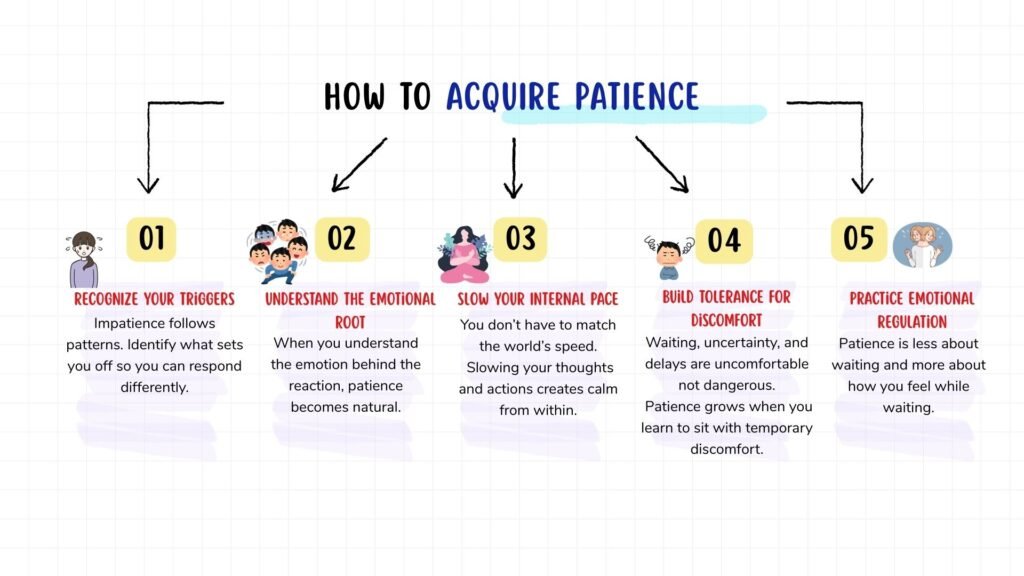
Here are the core foundations of acquiring patience:
1. Recognize Your Triggers
Impatience usually follows predictable patterns traffic, delays, slow responses, or unmet expectations. When you identify the moments or situations that trigger frustration, you gain the power to respond differently instead of reacting automatically.
Ask yourself:
What types of situations consistently make me impatient? Why?
2. Understand the Emotional Root
Impatience often stems from deeper emotions: stress, fear, pressure, or the desire for control. When you acknowledge the emotion behind the impatience, you stop fighting the situation and start understanding yourself.
For example:
- Stress may cause you to rush.
- Fear of missing out may trigger frustration.
- Perfectionism may make you expect things to go your way.
Recognizing the “why” builds inner patience.
3. Slow Your Internal Pace
Even if the world is fast, you don’t have to be. Learning to slow your thoughts, speech, and reactions helps cultivate natural patience.
Simple ways to slow down:
- Walk a little slower
- Eat without distractions
- Speak with intention instead of rushing your words
- Pause before answering anything emotionally charged
Slowing your pace trains your mind to stay calm and aware.
4. Build Tolerance for Discomfort
Many people are impatient because discomfort waiting, uncertainty, or delay—feels unbearable. But patience grows when you learn to sit with temporary discomfort without needing instant relief.
Start small:
- Wait a few minutes before checking a message
- Let a webpage load without refreshing
- Finish a task fully before switching to another
You’re teaching your brain that discomfort is not danger.
5. Practice Emotional Regulation
Patience is less about waiting and more about how well you regulate emotions during the wait. Techniques like journaling, deep breathing, and meditation enhance emotional regulation, making patience easier to acquire.
The more you train your mind to stay centered, the easier it becomes to remain patient—even in chaos.
How to Be More Patient: 9 Ways to Develop Patience in Everyday Life
If you’re wondering how to practice patience everyday, the key is to build small, consistent habits that help you slow down, stay mindful, and respond calmly to challenges. Patience isn’t developed in a single moment it’s strengthened through daily actions like breathing deeply, embracing small delays, and being present with others. When practiced regularly, these simple habits make patience feel more natural in your everyday life. These are the 9 ways to practice patience:
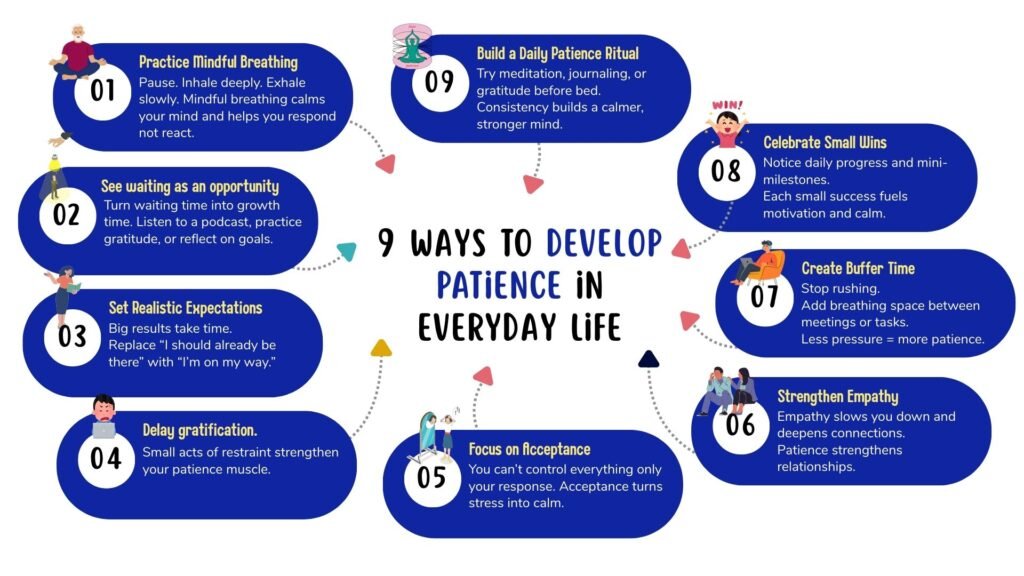
1. Practice Mindful Breathing
One of the simplest yet most effective ways to build patience is through mindful breathing and mindfulness practice. The next time you feel restless or irritated, pause and take a few deep breaths. Inhale slowly, hold for a moment, and then exhale deeply.
This small act grounds you in the present moment and signals your brain to relax. Instead of reacting instantly with frustration, you create space to respond calmly.
Tip: Try practicing a daily breathing exercise for five minutes. Over time, you’ll notice that patience comes more naturally.
2. Reframe Waiting as an Opportunity
Most people view waiting as wasted time. But what if waiting could become an opportunity instead?
For example:
- Stuck in line? Use the moment to practice gratitude.
- Waiting for someone? Listen to a podcast or reflect on your goals.
- On hold with customer service? Try observing your surroundings without judgment.
By shifting your mindset from “wasting time” to “using time differently,” waiting transforms from an annoyance into a moment of self-growth.
3. Set Realistic Expectations
Much impatience comes from unrealistic expectations. We want results instantly, whether it’s fitness progress, financial growth, or career success. But reality doesn’t always work that way.
If you expect overnight success, you’ll almost always feel frustrated. Instead, remind yourself that meaningful results take time. Progress is often invisible at first but it’s happening in the background and staying patient will gradually improve self-esteem as you recognize your growth.
Mindset shift: Replace “I should already be there” with “I am on my way.”
4. Practice Delayed Gratification
Patience is strongly tied to the ability to delay gratification. Every time you resist the urge for instant rewards, you strengthen your “patience muscle.”
Examples you can try:
- Wait 10 minutes before checking your phone in the morning.
- Save money for something meaningful instead of impulse buying.
- Stick with a long-term project even when results aren’t immediate.
The more you practice delayed gratification, the easier it becomes to stay patient in bigger situations.
5. Shift Focus From Control to Acceptance
A major cause of impatience is trying to control what you cannot. Traffic jams, weather changes, or other people’s behavior are beyond your control. What you can control is your response.
By practicing acceptance, you free yourself from unnecessary frustration. Instead of asking, “Why is this happening to me?” shift the question to “What can I do with this moment?”
This mindset turns obstacles into opportunities for growth.
6. Strengthen Empathy in Conversations
Impatience often shows up in our relationships. Maybe you interrupt people mid-sentence, rush them to make decisions, or get irritated when they don’t think like you.
The antidote is empathy. When you slow down and really listen, you not only show respect but also deepen your connections. Remember: patience isn’t just waiting for your turn to speak—it’s fully understanding the other person’s perspective.
Exercise: In your next conversation, focus on listening without preparing your response until the other person finishes.
7. Create Buffer Time in Your Schedule
A tightly packed schedule is a recipe for impatience. If you’re rushing from one meeting to another or trying to complete 20 tasks in a day, frustration is inevitable.
Instead, build buffer time into your schedule. Give yourself extra minutes between appointments, or plan fewer tasks but do them with full focus.
This not only supports effective stress management but also helps you approach challenges with a calmer, more patient mindset.
8. Celebrate Small Progress
Impatience often comes from only looking at the big end goal. But when you celebrate small wins along the way, you fuel motivation and reduce frustration.
For example:
- If you’re learning a new skill, notice each small improvement.
- If you’re building healthier habits, acknowledge each day you follow through.
- If you’re working on long-term success, track the milestones you’ve achieved.
Patience thrives when you shift focus from “I’m not there yet” to “Look how far I’ve come.”
9. Build a Daily Patience Ritual
Finally, consider creating a daily ritual that reinforces patience. This could be meditation, journaling, yoga, or even practicing gratitude before bed.
Consistency is key. A small daily practice compounds over time, helping you stay calm and collected in situations where you’d normally be frustrated.
Think of it as training your inner world, so the outer world doesn’t easily shake you.
How Patience Transforms Your Life
Before we look at how to handle impatience, let’s pause and understand the deeper benefits of living with patience.
- Better Mental Health – Patience reduces stress, anxiety, and frustration. It helps you stay calm even in chaotic environments.
- Improved Physical Health – Lower stress levels mean reduced blood pressure, fewer headaches, and better overall well-being.
- Stronger Relationships – When you give people the time to express themselves, you build trust and respect.
- Wiser Decision-Making – With patience, you don’t rush choices you think them through, leading to better outcomes.
- Increased Productivity – Paradoxically, slowing down with patience often leads to more effective work and long-term success.
- Personal Growth – Patience teaches resilience, self-discipline, and the ability to see challenges as opportunities.
Patience isn’t just about waiting without frustration it’s a mindset that brings emotional strength and long-term rewards.
When Impatience Shows Up: How to Handle It in the Moment
Even with the best intentions, impatience will strike. Maybe your project is delayed, someone keeps you waiting, or you’re eager for results that take time. The key is not to eliminate impatience but to manage it wisely when it appears.
Here are practical steps:
- Pause Before Reacting – Count to ten, take a deep breath, or step away briefly. This prevents impulsive reactions.
- Shift Your Focus – Instead of obsessing over what’s delayed, think about what you can control right now.
- Reframe the Situation – Ask yourself: Will this matter in a week, month, or year? Often, the answer softens your frustration.
- Use Distraction Wisely – Listen to music, read something short, or do a micro-task while waiting. This makes time feel less wasted.
- Self-Compassion – Remind yourself that impatience is natural. Don’t beat yourself up for feeling it, acknowledge it and move forward.
With practice, these strategies turn impatience into an opportunity for calm and mindful growth.
Final Thoughts
Impatience is natural, but it doesn’t have to control you. By practicing mindfulness, setting realistic expectations, celebrating small wins, and embracing acceptance, you can transform the way you approach challenges.
Remember: Every moment of impatience is an opportunity to practice patience. Over time, you’ll find yourself calmer, stronger, and more at peace not just with others, but with yourself.
Visit: https://thereaderstreet.com/
FAQs: How to Develop Patience
1. How to Be Patient in Life?
You can be more patient in life by pausing before you react, taking a deep breath, and reminding yourself that not everything needs to happen instantly. Focus on what you can control, set realistic expectations, and treat delays as small moments to breathe rather than obstacles. With daily practice, patience becomes a natural part of your mindset.




3 Responses